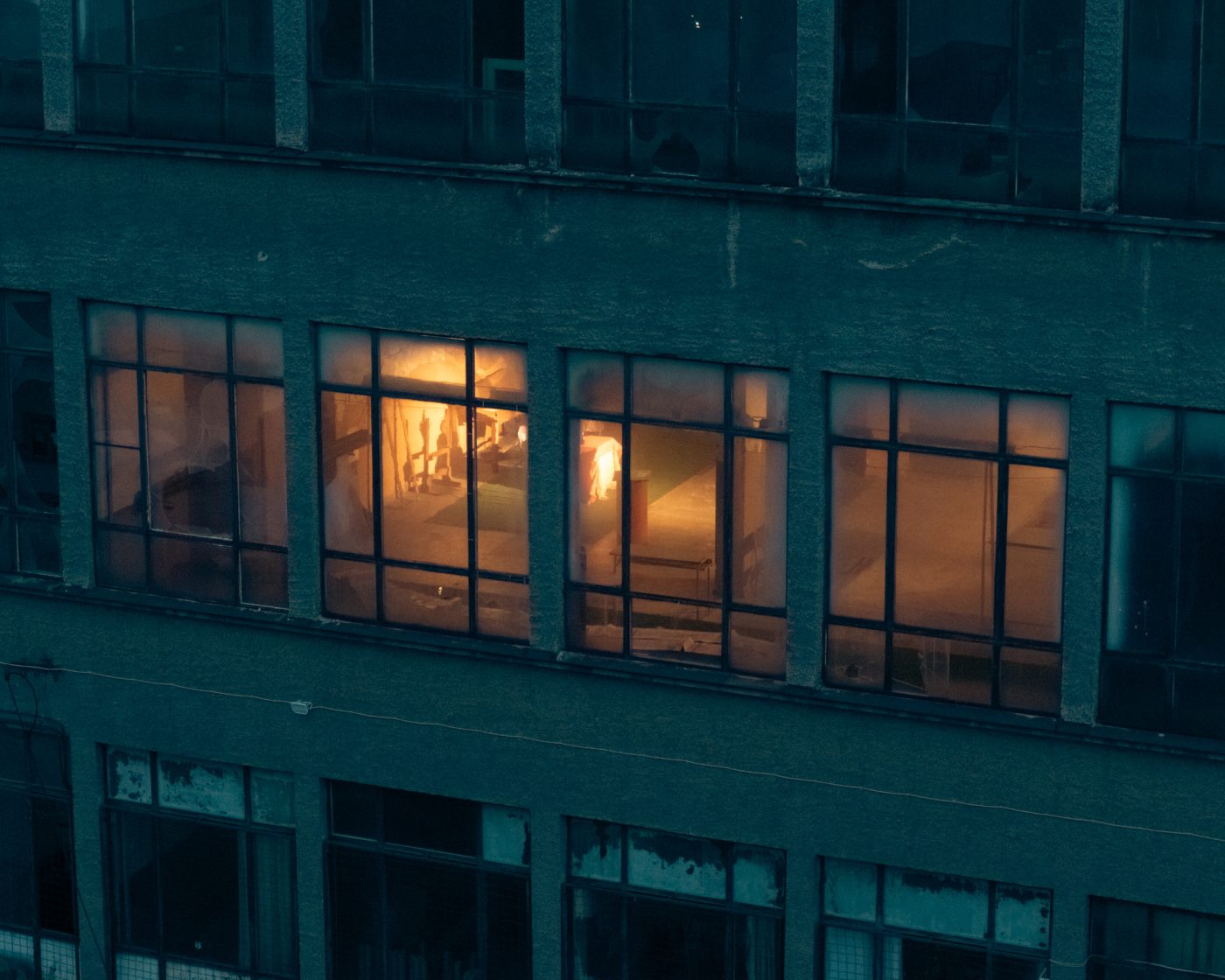
Center Christo and Jeanne-Claude at the HEAT Fest Sofia!
From June 4 to 6, the iconic Banski Square in front of the Regional History Museum of Sofia became a stage for ideas, art, urban solutions, and community energy. The first edition of HEAT FEST 2026 – Sofia Climate Festival, organized by the Sofia Development Association and the Sofia Municipality, with the support of Oborishte District, brought together citizens, scientists, artists, and international experts through a rich three-day program dedicated to the future of the capital.
The inaugural edition of the festival focused on one of the most important topics in adapting cities to climate change: the waters of Sofia. The area surrounding the Central Mineral Baths was chosen symbolically as a place where the city’s history, collective memory, and thermal heritage converge. At a time of increasingly frequent heat waves, water and green infrastructure are key to creating a cooler and healthier urban environment.
A special guest of the festival was Jessika Roswall, European Commissioner for Environment, Water Resilience and a Competitive Circular Economy, who toured the festival grounds and explored the green solutions presented throughout the event.
The activities, sustainable strategies, and the architectural competition for the complete transformation of the former Gabrovo Textile Technical School into the Christo and Jeanne-Claude Center were presented in a dedicated thematic area of the festival. The New European Bauhaus Zone provided a platform for discussions on sustainable design, architecture, and innovative urban solutions developed through active public participation.
It was emphasized that the Center exists not only as a future capital investment project. The building is already hosting artist residencies, workshops, exhibitions, and temporary events. Through these activities, the site is gradually opening itself to artists, local organizations, students, citizens, and partners from Bulgaria and abroad. This approach allows the future identity of the Center to be shaped long before the completion of the renovation works. The content, encounters, and participation of people are considered just as important as the physical transformation of the building itself. In this way, the Center is already establishing itself as a space for culture, education, contemporary ideas, and dialogue between industrial heritage and new creative practices.
Gabrovo’s presentation also highlighted two complementary European projects connected to the building and the future function of the Center. The Workwear Metamorphoses project, funded through the Creative Europe Programme, focuses on Gabrovo’s industrial history, textile heritage, contemporary design, and artistic exchange between European cities. Within the framework of the project, artists explore workwear as an element of industrial culture. Through creative residencies, meetings with experts, interviews with people connected to the textile industry, and a future traveling exhibition, the project links local memory to a broader European narrative about labor, production, and contemporary art.
The second project, AccesS, funded through the Horizon Europe Programme, focuses on accessibility, sustainability, and smart solutions for buildings and urban environments. The Christo and Jeanne-Claude Center is one of the pilot sites where new approaches to universal accessibility, energy efficiency, digital tools, and more inclusive environments will be developed and tested. Together, these projects build upon the core investment and demonstrate how a building can evolve not only as infrastructure, but also as a place for knowledge, cultural memory, innovation, and participation. This was the central message presented by Gabrovo within the New European Bauhaus Zone: that sustainable urban development is not only a matter of construction, but also of content, people, accessibility, and long-term public value.
Carnival weekend at the Christo and Jeanne-Claude Center!
During the carnival weekend (May 15–16), alongside tailless cats and satirical costumes, the Christo and Jeanne-Claude Center will present a multilayered program featuring two exhibitions, a performance, and a party with optimistic electronic music inspired by chess.
The program brings together artists and designers from six European cities—Chemnitz, Mulhouse, Manchester, Tampere, Łódź, and Gabrovo—as part of the project Metamorphoses of Workwear, realized with the support of the Creative Europe programme. Over the course of two years, through residencies in these cities, meetings with local communities, and research into both active and abandoned factories, artists created 18 contemporary workwear designs inspired by local industrial histories. The culmination—and grand finale—of the project will take place in the building of the former Textile Technical School in Gabrovo, now home to the Christo and Jeanne-Claude Center.
On May 15 at 18:00, the performance Metamorphoses of Workwearwill take place, in which participants without professional performance experience will wear the created designs and recount, from their own perspectives, the stories behind them. The “actor-models” will welcome visitors into classrooms frozen in 2009, production spaces, and dyeing and mechanical engineering studios, while audiences will be invited to discover the narratives scattered across the building’s different floors.
On May 16 at 15:00, before the carnival parade, the exhibition Metamorphoses of Workwearwill open. The installation brings together all 18 designs, interweaving Gabrovo’s textile industry with Chemnitz’s industrial innovation, Manchester’s labor resistance, Łódź’s fashion history, Mulhouse’s ornamental craftsmanship, and Tampere’s ritual practices.
Later that evening, from 23:00, the gymnasium of the former Textile Technical School will transform into a stage for the Romanian electronic duo K not K, whose music is inspired by the game of chess and defined by an optimistic sound. Following performances at festivals and venues across nearly all of Europe, the duo arrives in Gabrovo with an energy that naturally extends the carnival night. Carnival costumes are highly encouraged.
Running in parallel, on May 15 at 15:00, the exhibition Childhood Years will also open, presented in Gabrovo for the first time following its showing at the Bulgarian Cultural Institute in Paris. The exhibition explores childhood as the first stage of imagination, combining rare photographs from Christo’s early years in Bulgaria with works by contemporary artists connected to the Center. It was created to mark the 90th anniversary of Christo’s birth and the 30th anniversary of The Pont Neuf Wrapped.
Christo as a trapper with Anani, 1945 (photo from the Yavashev family archive)
Metamorphoses of Workwear is realised in collaboration with the Municipality of Gabrovo and in partnership with the Interactive Museum of Industry, with financial support from the Creative Europe programme. International partners in the project include the Museum of Industry in Chemnitz and the Central Museum of Textiles in Łódź. Childhood Years is organized by the Christo and Jeanne-Claude Center – Gabrovo and the Bulgarian Cultural Institute in Paris, with the support of the Museum of Humor and Satire, the Municipality of Gabrovo, and the America for Bulgaria Foundation.
The participants of Curatorial School 2.0 complete their training with an unconventional exhibition at the Museum of Humor and Satire in Gabrovo!
Lectures / photo – Boryana Pandova
The exhibition “Structures in Transition” (24 March – 25 July 2026) is the culmination of the two‑month Curatorial School – an educational and practical program aimed at developing curatorial skills, critical thinking, and professional preparation in the field of visual arts.
Within the context of the Bulgarian art scene, curatorial work often remains ambiguous. The initiative of the Christo and Jeanne‑Claude Center in Gabrovo seeks to create a sustainable framework for learning, collective practice, and public presentation. The school gives its 18 participants an opportunity for interdisciplinary collaboration – an approach inspired by the combination of different kinds of knowledge and experience characteristic of Christo and Jeanne‑Claude’s projects.
Evgeni Dimitrov, Opening of the first private liquor store in Sofia, 1992
Hosted by the Museum of Humor and Satire in Gabrovo, “Structures in Transition” is organized in three thematic sections, curated by three working groups mentored by Margarita Dorovska, Svetlana Kuyumjieva, and Vesela Nozharova. The participants also had the opportunity to consult with the lecturers Vasil Vidinski and Stanimir Stoyanov.
The exhibition includes works from the museum’s archive, brought into dialogue with the perspectives of young painters, contemporary artists, illustrators, and even photojournalists. The project explores the tension between the individual and society, revealing the many invisible ties and rules that connect them.
Its three sub‑themes are “The Queue,” “The Game,” and “Taming the Monument.”
Angelariy Dimitrov, Unification, 2025, acrylic on canvas
“The Queue” examines a familiar social phenomenon that speaks volumes about different historical periods – their shortages, needs, and aspirations. A line of people waiting for something is a democratic and self‑regulating structure, yet it can easily become a monument to passivity or a vicious circle. Group “The Queue”: Ivana Borisova, Maria Borisheva, Yoshka Mihaylova, Iva Rudnikova, Krastina Stefanova, Emilia Stoeva
Taming the Monument – Desctructive creation
Taking as its starting point the local case of Chardafon in Gabrovo – a monument whose head was replaced by those in power more than once – “Taming the Monument” investigates the “beheading” of monuments both literally and metaphorically: as the end of an ideological narrative and as a process revealing public memory as a field of continual rewriting. Every monument has an ideological lifespan. Group “Taming the Monument”: Hristina Decheva, Martina Grueva, Ivelina Ivanova, Kalina Ivanova, Teodora Marinova, Marina Kisyova de Heus
The “Game” segment, inspired by Johan Huizinga’s concept of Homo Ludens (“the playing man”), looks at play not only as entertainment or an escape from reality but also as a fundamental principle through which a society understands, constructs, and resists the world. The works presented analyze the mechanisms of (dis)empowerment that shape our reality, leaving room for experimentation and a reconsideration of the rules by which we live. Group “The Game”: Paola Dimova, Aleksi Ivanov, Natalia Krisenko, Ekaterina Leondieva, Ralitsa Petkova, Ana Radkova, Elena Tsvyatkova
“Structures in Transition” runs until 25 July 2026 at the Museum of Humor and Satire in Gabrovo.
Participating artists: Zhenya Adamova, Velko Angelov, Zhivko Angelov, Ivo Bistrichki, Tsvetomira Borisova, Veselin Borishev, Lachezar Boyadjiev, Panayot Barnev, Anna Vasof, Alexander Valchev, Ivan Grigorov, Damyan Damyanov, Petra Dimitrova, Angelariy Dimitrov, Evgeni Dimitrov, Stefan Ikoga, Hristo Komarnitski, Veselin Kostadinov, Ivan Landzhev, Roxana Markova, Yoshka Mihaylova, Ivan Moudov, Stefan Nikolaev, Alina Papazova, Adrian Paci, Nia Pushkarova, Kamen Stoyanov, Isao Hashimoto, Veronika Tsekova, Valko Chobanov, Venelin Shurelov, Geri Georgieva
––
Curatorial School 2.0 is a project by the Christo and Jeanne‑Claude Center and Plakat Combinat Ltd., funded under procedure BG‑RRP‑11.021, Grant Scheme “New Generation of Local Cultural Policies for Major Municipalities,” Investment “Development of Cultural and Creative Sectors,” Component “Social Inclusion,” National Recovery and Resilience Plan.
Stories from the Textile Technical School in Gabrovo: Metamorphosis of Workwear
The Textile Technical School, the building that now houses the Christo and Jeanne-Claude Center, is an integral part of the history of the city’s textile industry, having long served as a generator of skilled professionals who supplied Gabrovo’s enterprises with a workforce. Within the framework of the project “Metamorphoses of Workwear,” we trace the school’s history through interviews with individuals connected to its activities – former students, teachers, neighbours, and enthusiasts – and transform these stories into a work of art that preserves their memories and serves as a foundation for future projects related to the city’s industrial past.
In partnership with playwright and director Martina Novakova, the collected stories were transformed into a script for a verbatim performance of the “travelling theatre” type, which took place on May 2 and 3 at the Center. We entered the building guided by the authentic voices of former students of the technical school, teachers, members of the Gabrovo municipal administration, neighbors, and tour guides, embodied by the actresses of the Gabrovo Drama Theatre “Racho Stoyanov” – Nadezhda Petkova, Magdalena Slavcheva, and Radostina Angelova.
“Metamorphosis of Workwear” aims to rethink the design of workwear in contemporary and future professions, inspired by the industrial heritage of six European cities – Chemnitz, Lodz, Manchester, Mulhouse, Tampere, and Gabrovo. In collaboration with the Interactive Museum of Industry – Gabrovo, we will give well-deserved attention to the history, development, and sustainability of industrial processes in Gabrovo.
As a project partner, the Christo and Jeanne-Claude Center plays a key role in actively engaging the local community, collecting and preserving stories of the region’s industrial heritage, and inspiring new artistic interpretations. For this very reason, we openly share the collected materials, in the hope that they will spark further processes and inspiration that can grow beyond the project’s initial framework.
Mariana Ivanova, 37 years old, tour guide – animator at the Interactive Museum of Industry Gabrovo.
Plamen Krastev, 61 years old, former teacher of specialized subjects – spinning – at the Textile Technical School.
Velina Rakova, 79 years old, retired, former employee of the Gabrovo Municipality.
Alexander Lalev, 47 years old, expelled from the technical school due to an excessive number of absences.
Ivelina Ivanova, 37 years old, designer and embroiderer, former student of the technical school, with a studio at the Christo and Jeanne-Claude Center.
Galina Gancheva, 46 years old, fashion designer, former (not very serious) student of the technical school.
Krasnodar, 81 years old, neighbor, has lived next to the technical school his entire life.
We continue with a follow-up to the previously successful performance “A Frame from the Textile” at the Christo and Jeanne-Claude Center, directed by Martina Novakova, which was based on the interviews conducted last year. A series of theatrical workshops with a group of students from the National Aprilov High School will be held to create a second performance, based on the stories already collected from Gabrovo residents about the past, present, and future of the city’s textile industry. The performance will take place on March 19 and 21 at the Christo and Jeanne-Claude Center. Here are the additional interviews the students have conducted so far:
Cenka Petrova
Melipe Veleva
Radka Kosturska
A Frame from the Textile is part of the major European project “Metamorphoses of Workwear,” funded by the Creative Europe program. The project connects six cities with rich industrial histories – Chemnitz, Gabrovo, Lodz, Manchester, Mulhouse, and Tampere – around the idea of rethinking workwear through the lens of today’s labor, contemporary design, and local memory. The Municipality of Gabrovo is an official project partner, while the Center implements it at the local level.
SCHOOL FOR CURATORS 2.0
The Christo and Jeanne-Claude Center for Contemporary Art is opening the application procedure for the second edition of School for Curators, which will take place from February to March this year. The application deadline is January 11 (Sunday), and the participants selected by the course mentors will be notified by email on January 19 (Monday).
The School for Curators offers an educational and practice-based program aimed at developing curatorial skills, critical thinking, and professional preparation in the field of visual arts. Within the context of the Bulgarian contemporary scene—where curatorial practice often remains fragmented and intuitive—the initiative seeks to establish a sustainable framework for learning, practice, and public presentation.
Following a successful first edition in 2024, which brought together 24 participants and led to the realization of exhibition projects and lasting professional relationships, the new edition builds on the format by transitioning to in-person learning, strengthening its practical focus, and fostering regional connectivity. The program will include between 18 and 21 participants, who will go through four stages: preparation; theory and group work; practice and exhibitions; archiving and evaluation.
The emphasis will be placed on key aspects of curatorial practice—from conceptualization and critical frameworks to technical skills such as installation, lighting, working with audiovisual equipment, and exhibition graphics. The program will include visits to galleries and museums in Gabrovo, Kazanlak, and Veliko Tarnovo, introducing participants to different types of spaces—independent, public, and commercial. Each group will receive a production budget to realize a segment of an exhibition concept, accompanied by a curatorial text and a real installation within the space of the Christo and Jeanne-Claude Center.
The project also focuses on teamwork, with participants taking on various roles and responsibilities required for producing an exhibition—communication with artists and institutions, exhibition design, transport planning, installation and deinstallation, public programs and events, work scheduling, budget planning and management, fundraising, communication, and marketing.
In the practical module, participants will work with art historians and curators Vesela Nozharova, Svetlana Kuyumdzhieva, and Margarita Dorovska. The theoretical module will have two components: lectures on contemporary philosophy led by Vasil Vidinski, and a course introducing participants to key texts from the history and theory of curatorial practice, led by Stanimir Stoyanov and various guest lecturers.
Vesela Nozharova is an art historian and curator, and the author of the book Introduction to Bulgarian Contemporary Art 1982–2015. She was the curator of the Bulgarian Pavilion at the 52nd Venice Biennale in 2007 and co-curator of the Bulgarian Pavilion at the 11th Venice Architecture Biennale. She is also a co-founder of the curatorial collective Art – Affairs and Documents.
She has curated numerous exhibitions in Bulgaria, including the multidisciplinary projects Smoke. A History of Tobacco (Plovdiv – European Capital of Culture, 2019) and Money Talks (2011, with Georgi Gospodinov). Her work is strongly focused on the relationship between contemporary art and history, explored through projects such as History In Between (2020–2021) at the Regional History Museum – Sofia and the festival The Past That Hasn’t Passed (2022–2023).
Nozharova is the author—individually or as part of a team—of a wide range of exhibition formats, including Art Start. Young Artists to Watch (since 2016, with Stefka Tsaneva and others), Sculpture Now (2018–2019), Sofia Art Project (2022–2023), the Octopus Gallery at Lago Sofia with the collective Art – Affairs and Documents, the international curatorial residency CLICK, among others. Her most recent major project is the exhibition A Particle of a River, produced for the National Autumn Exhibitions in Plovdiv (2025).
Since 2015, she has been the curator of Credo Bonum Gallery. She holds a Master’s degree in Art History from the National Academy of Arts in Sofia.
Svetlana Kuyumdzhieva is an art historian, critic, and curator, holding a PhD in Art Studies. Between 2003 and 2013, she worked as a gallerist at Credo Bonum Gallery (founded in 2003 as SIBANK Gallery) and realized a number of independent projects, including the exhibitions Daring and Beauty, The Temptation of Chalga, and the Contemporary Art Week in Plovdiv.
She has taken part in numerous professional specializations and residencies in Germany, Austria, the United States, and South Korea, including programs such as CEC ArtsLink, KulturKontakt, and the intensive curatorial course of the Gwangju Biennale. From 2015 to 2021, she served as Artistic Director of the Plovdiv – European Capital of Culture 2019 project.
In 2022, she curated the first municipal artist residency program in Plovdiv, ContextAiR. She is a member of the International Association of Independent Curators (ICI). Between 2023 and 2025, she realized several major curatorial projects, including Documents. Painting After Photography in Bulgaria in the 1960s and 1970s (Sofia City Art Gallery, together with Daniela Radeva), Needles in a Haystack (National Gallery, within a project by the Bulgarian Fund for Women), Acqua alta. A History of Bulgarian National Participations in the Venice Biennale 1910–2024 (Plovdiv City Art Gallery, together with Plamen Petrov and Georgi Sharov), and The Monumental Ones. Five Plovdiv Artists and Their Trace in the City (Plovdiv City Art Gallery; design by punkt – Krasimir Stavrev and Nikol Decheva).
Between 2005 and 2009, she was Head of Research and Development and a curator at the Interspace Media Art Center, and from 2006 to 2011 she was the founding director of Cult.bg Foundation. The foundation manages the independent online media platform for art and culture Cult.bg, provides open-source services for professionals in the field, and administered the Fund for the Support of Debut Projects (2006–2007).
Alongside her institutional work, Margarita Dorovska hosts the podcast Govori Artistat. Her interests focus on art in public space and on the critical and creative use of technologies within artistic practices. She holds a Master’s degree in Curating Contemporary Art from the Royal College of Art and a Bachelor’s degree in Cultural Studies from Sofia University St. Kliment Ohridski.
Vasil Vidinski is a lecturer in Early Modern Philosophy and Contemporary Philosophy at the Department of History of Philosophy at Sofia University St. Kliment Ohridski. His academic interests focus on the philosophy of culture and the philosophy of art, as well as on the complex and multilayered interactions between science and culture.
Since 1998, he has been actively involved in literary life under the pseudonym VBV, with numerous publications, initiatives, awards, and editorial work. In 2007, he defended his PhD dissertation titled Interaction between Philosophy and Physics in René Descartes and Isaac Newton (the Problem of Relativity), and in 2017 he completed his habilitation with the study Coincidences. A Historical Typology. Since 2017, he has headed the Master’s program History and Contemporaneity of Philosophy, and as of 2025, he is the Head of the Department of History of Philosophy.
He has worked with a range of galleries and institutions in Bulgaria and abroad, including Gagosian, Tate Modern, Sarieva / Gallery, Charta Gallery, and Someth1ng, and has participated in projects realized in Bulgaria, the United Kingdom, Switzerland, Estonia, and the Netherlands. He holds a Master’s degree in Contemporary Art Theory and Curating from Goldsmiths, University of London.
Between 2019 and 2021, he was an editor for the cultural segment Kultura.BG on Bulgarian National Television. He is a co-founder of the artistic project Hyper.LLC, through which he collaborates with international artists on topics related to new ecologies, speculative realism, and object-oriented philosophy.
Among his recent projects and participations are the exhibitions The Eternal Return by Kaliya Kalacheva (Doza Gallery), ENTITIES by FuererNielsen and Ivelina Ivanova (Arosita Gallery), OOOBJECTS by Onur Kaymak (Toplocentrala – Regional Centre for Contemporary Arts), Uncertain Spaces by Gergana Tabakova and Radoil Serafimov (Doza Gallery), as well as his public lecture on institutional critique within the framework of ART START 2025.
Exhibition: “Linear Encounters: Bulgarian Traces in Abu Dhabi’s Modern Architectural Heritage”
Architect Dimitar Bogdanov
The Christo and Jeanne-Claude Centre, Gabrovo is delighted to invite you on 26 September to an exhibition that unfolds a little-known yet significant story – the role of Bulgarian architects and engineers in shaping the modern face of the capital of the United Arab Emirates.
“Linear Encounters: Bulgarian Traces in Abu Dhabi’s Modern Architectural Heritage” brings together archival documents, photography, audiovisual installations, and films to reveal how European modernist ideas intertwined with Arab cultural identity and the specific climate of the region.
Hosted at the Christo and Jeanne-Claude Centre, the exhibition enters into a natural dialogue with the legacy of the artist duo who fearlessly transformed the world into their canvas. The former Textile Technical School, today alive as a home of experiment and creative energy, amplifies the sense of fragile balance between heritage and contemporaneity, between the local and the global.
Linear Encounters is not only a journey into Abu Dhabi’s architectural memory but also an invitation to reflect on our own cities — their layers, vulnerabilities, and possible futures. Through discussion panels, workshops, and conversations with architects and heirs of this story, the exhibition transforms memory into a shared field of imagination.
🌃 PROGRAMME:
🗣️ Discussion panels (3rd floor, before the opening)
17:00–17:50 | Panel 1: Preserving Modern Architectural Heritage
18:00–18:50 | Panel 2: Contemporary Models for Displaying Modern Architectural Heritage
🥂 Official opening: 19:00
PANOPTIKUM or the Memory of Objects: a performance by director Martina Novakova
📷 Dimitar Gorchakov
⚡ In partnership with Racho Stoyanov Drama Theatre
🎫 Tickets: at the box office of Racho Stoyanov Drama Theatre or online here
On September 23 at 18:00, the Christo and Jeanne-Claude Center in Gabrovo invites you on a theatrical journey through the house of L. and the stories of unusual objects that preserve her memories, with the original performance PANOPTIKUM* by Martina Novakova.
Behind every corner of this house-museum lurks something unexpected: conflicting voices from the past; the gaze of a painted all-seeing eye; a silent telephone bought at a flea market in Madrid; a half-forgotten melody; the workers of a house-clearing company.
📷 Dimitar Gorchakov
Memory becomes a dangerous territory, where the fate of objects depends on the attention of the audience. Each viewer must choose their own place within the space and the story they wish to follow. The experience combines several disciplines: verbatim theatre, original live music, and installation art. A central source of inspiration for the performance is the work of Christo and Jeanne-Claude.
📷 Dimitar Gorchakov
PANOPTIKUM is a story about the fear of losing memory, about the material world and the objects we choose to surround ourselves with, the value we attribute to them, and their influence on our relationships.
* panoptikum (noun, singular) — a museum where rare and valuable objects or wax figures are displayed.
❕ Duration: 80 minutes, during which the audience moves freely through the space. Please inform the organizers in advance if you require a seated place.
📷 Dimitar Gorchakov
PANOPTIKUM is an original performance by Martina Novakova, adapted to various spaces – houses, museums, underground sites – and constantly evolving. It was created within the Master’s program in Theatre Arts at Carlos III University of Madrid, under the direction of Juan Mayorga. The premiere took place in June 2018 at Auditorio de Leganés in Madrid. In 2020, it was selected by EURODRAM Bulgaria and presented within the “ProText 10” festival at Goethe-Institut, Sofia. Its Bulgarian premiere was realized with the financial support of the National Culture Fund, Debuts program (2021), and took place in February 2024 at RCAC Toplocentrala.
The event in Gabrovo is carried out with the financial support of the National Culture Fund, Distribution program 2024, and in partnership with the Christo and Jeanne-Claude Center – Gabrovo and Racho Stoyanov Drama Theatre – Gabrovo.
RadLab Studio and the largest festival for analog and experimental photography in Bulgaria
For the second year in a row, RadLab Studio is hosting an event dedicated to analog and experimental photography. De Vita Solitaria / On the Solitary Life is an independent festival – though the word hardly captures its essence – a three-day gathering of artists, enthusiasts, collectors, and researchers of photographic processes who are connected to, or in search of, a relationship with analog photography.
The theme of the 2025 edition is “Solitude” – not as alienation, but as a space for observation, inner dialogue, and conscious encounters with oneself. The festival explores solitude as a potential for creative imagination, while also building a bridge back to the time before social networks, when every image was an act of discovery – found through effort, patience, and silence.
The program of De Vita Solitaria unfolds through six workshops, three exhibitions, four discussions, interventions in public space, and challenges to our own understanding of photography. Events move between the darkroom and the street, between the intimate and the noisy. The atmosphere is participatory and encourages dialogue, combining personal experiences with the collective energy of sharing.
The events will take place at two locations in Gabrovo:
RadLab Studio (9Zh Shipka St.)
RadLab Residency @ Christo & Jeanne-Claude Center (72 Bryanska St. – former Textile High School)
Participation is free of charge. You don’t need to own a Mamiya RB67 or to have read Camera Lucida in French – all that’s required is to register in advance, so that materials and logistics can be prepared.
De Vita Solitaria – RadLab Community Gathering 2025 will be held from 20 to 22 September 2025 in Gabrovo. Full details of the program can be found here.
About RadLab Studio
RadLab Studio is a space for analog and alternative photography where like-minded people can learn, experiment, and inspire one another. The team believes that analog photography and noble photographic processes should be accessible to everyone. Its mission is to foster inclusion by providing open access to the studio, conducting research, and preserving and sharing both knowledge and practical skills.
RadLab believes the most meaningful processes happen together – and invites anyone who shares this vision to become part of its community.
Childhood Years: Christo and Jeanne-Claude Center presents an exhibition at the Bulgarian Cultural Institute in Paris
Photo of Christo as a trapper with Ananie, 1945 (archives of the Yavachev family)
On September 19, the exhibition “Childhood Years” by the Christo and Jeanne-Claude Center for Contemporary Art – Gabrovo will open at the gallery of the Bulgarian Cultural Institute in Paris. The occasion is twofold – 90 years since the birth of Christo Javacheff and 30 years since the emblematic Pont Neuf project, which left a lasting mark on the artistic history of Paris.
Photo of the play staged by Christo, “The Capulets”, 1948 (archives of the Yavachev family)
Childhood Years explores childhood as the first stage of imagination – a time when play and freedom outline the contours of future creative thought. The exhibition brings together rare photographs and documentary materials from Christo’s early years in Bulgaria with works by a new generation of contemporary artists currently working at the Center in Gabrovo. In this way, the exhibition creates a bridge between Christo’s personal history and the collective energy of young artists, between the memory of beginnings and the vision for the future.
Photo of the participants in the high school art club /Christo is the first on the left/, 1948 (archives of Dragan Nemtsov)
Seven of them – Anton Ivanov, Gergana Lazarova-Runkel, Ivelin Penchev, Konstantin Zlatev, Nevena Ekimova, Pavel Tsarov, and Radoil Serafimov – will present their works in the French capital for the first time.
A special section is dedicated to Christo’s childhood – his family, schools and factories, favorite games, and first steps in art. These early experiences would later crystallize into the iconic elements of his work with Jeanne-Claude – fabrics, ropes, barrels.
Opened in 2023, the Christo and Jeanne-Claude Center is located in the building of the former Textile High School in Gabrovo. It functions as an artist residency and space for contemporary art, inspired by the legacy of Christo and Jeanne-Claude. Though still in development, the Center already attracts young creators from different countries and is steadily establishing itself as a place for experimentation, dialogue, and new artistic horizons.
The exhibition “Childhood Years” is organized by the Christo and Jeanne-Claude Center – Gabrovo and the Bulgarian Cultural Institute in Paris, with the support of the Museum of Humor and Satire, the Municipality of Gabrovo, and the America for Bulgaria Foundation.
Radoil Serafimov: drawing has never been a decision so much as an extension of self.
📷 Boryana Pandova
For Radoil Serafimov, drawing has never been a decision so much as an extension of self. From early childhood, it existed as a natural motion – quiet, constant, and unquestioned. There was never a dramatic pivot toward art, no sudden realization. It was always there, simply unfolding along with him.
He studied painting at the Faculty of Fine Arts in Veliko Tarnovo, and after graduating, returned to his hometown of Gabrovo. The first couple of years back were marked by uncertainty: a stretch of time defined more by absence than direction. No income, no formal work, no studio. To sustain himself, he began creating paintings with commercial potential. Even in that space, he remained attentive to the integrity of the image, steering away from decorative clichés or cheap sentiment, committed instead to maintaining a sense of internal coherence and aesthetic seriousness.
Eventually, with support from his family, he secured a small attic space that became his first proper studio. In just a few months, he produced around twenty new paintings and began submitting them to competitions and open calls – many of which, at the time, still offered significant opportunities for young artists. Most led to silence. His early efforts were regularly overlooked, especially in the more centralized and saturated circles in Sofia.
📷 Boryana Pandova
But in 2014, something shifted. Though his application for the BAZA Award wasn’t selected, one of its jurors, curator Maria Vassileva, noticed his portfolio. Through the Stoyan Kambarev Foundation, she was then initiating a new award specifically for young painters. Serafimov received the 2014 prize, and with it came an opening – more invitations, more visibility, more recognition. What followed wasn’t a breakthrough in the cinematic sense, but rather a slow, steady unfolding of possibility.
For the next nine years, Serafimov balanced his painting practice with full-time work as a scenography technician in the local Gabrovo theater. It offered financial stability, but more importantly, it allowed him to maintain a consistent presence in the studio. Every free moment, before rehearsals, between productions, after hours, he returned to his canvases.
Over time, his work has evolved in form, palette, and tone, but its core has remained anchored in a particular way of looking: careful, considered, open to ambiguity. Some images are born from direct observation, others from fleeting impressions or visual memory. The subject matter ranges widely – figures, landscapes, fragments of architecture, imagined spaces – but what holds it together is a persistent desire to touch on something beyond the visible.
He rarely begins with a defined message or conceptual frame. Sometimes a painting arrives with urgency, completed in a day, responding to a specific sensation or internal spark. Other times, the process unfolds more slowly in days of looking, doubting, reworking. His more recent practice favors this latter rhythm, marked by intervals of reflection, hesitation, and quiet resistance. What compels him most are forms that resist simple interpretation – shapes or images that contain multiple readings, that suggest rather than state. The symbolic emerges not through theory, but through texture and tone. “I’m drawn to the spaces in an object where something else is hiding,” he says. “Something layered, something not immediately legible.”
📷 Boryana Pandova
When Serafimov was offered a studio at the Christo and Jeanne-Claude Center in Gabrovo, his response was cautious. He had grown attached to his previous workspace, and relocating meant disrupting a familiar rhythm. It took months before he fully moved in – months in which the studio existed more as a potential than a place of work. Eventually, that shifted. The space settled around him. He began painting there consistently, finding his own pace within the new architecture. Today, he describes his studio at the Center as a functional, focused environment, less romantic than grounded, less about inspiration than about permission.
The building itself, once a textile school and now in transformation, holds a certain ambient charge. While Serafimov doesn’t directly use found objects or industrial remnants in his work, he responds to their quiet presence. To him, they are not resources to be repurposed but witnesses to time: objects that carry history without needing to explain it.
Though his practice is deeply individual, Serafimov recognizes the subtle value of proximity to others. The artists at the Center each work in distinct mediums, with different temperaments and trajectories, but over time, an organic form of community has begun to take shape – not one based on collaboration, but on presence, on shared effort, on parallel lives unfolding under the same roof. It is not a collective in the conventional sense. There are no joint projects or formal frameworks for exchange. But the slow accumulation of conversations, the gentle weaving of familiarity, has created a quiet current between the studios, one that Serafimov finds grounding, even if he remains mostly inward in his focus.
When asked about the connection between his practice and the Center’s namesakes, Serafimov is reflective but firm. He admires the work of Christo and Jeanne-Claude, their dedication, the magnitude of their vision, their insistence on impermanence. He sees value in the ephemerality they pursued, in the idea that an artwork can be both monumental and momentary. But his own work speaks in another register. It unfolds slowly, endures materially, resists spectacle. He does not seek to mirror their legacy, nor does he feel obliged to. What resonates is their conviction – their unyielding commitment to making, regardless of reception or reward.
In a cultural moment where painting is often asked to justify itself, where trends favor interdisciplinarity, political urgency, or social engagement, Serafimov continues to trust the quiet labor of the image. He is not indifferent to the world, but believes that complexity can live within the frame, within the act of looking, within the relationship between pigment and surface. Not every day in the studio results in a painting. Some are filled with silence, with music playing softly in the background, with notes, books, sketches, and pauses. Others begin with no plan at all: a brushstroke, a line, a movement that slowly unfolds into something more.
There is no fixed concept or unifying thesis behind his work. He avoids declarations. His approach is intuitive, exploratory, porous. If there is a theme, it lies in the attention he gives to things – his commitment to seeing, to lingering, to allowing meaning to arrive without force. As for the future of his place in the Center, he remains open. If the atmosphere shifts too far from the conditions that allow his practice to thrive, if the rhythms change, if the demands overtake the quiet, he may choose to move on. For now, though, he is here. And in this moment, that is enough.