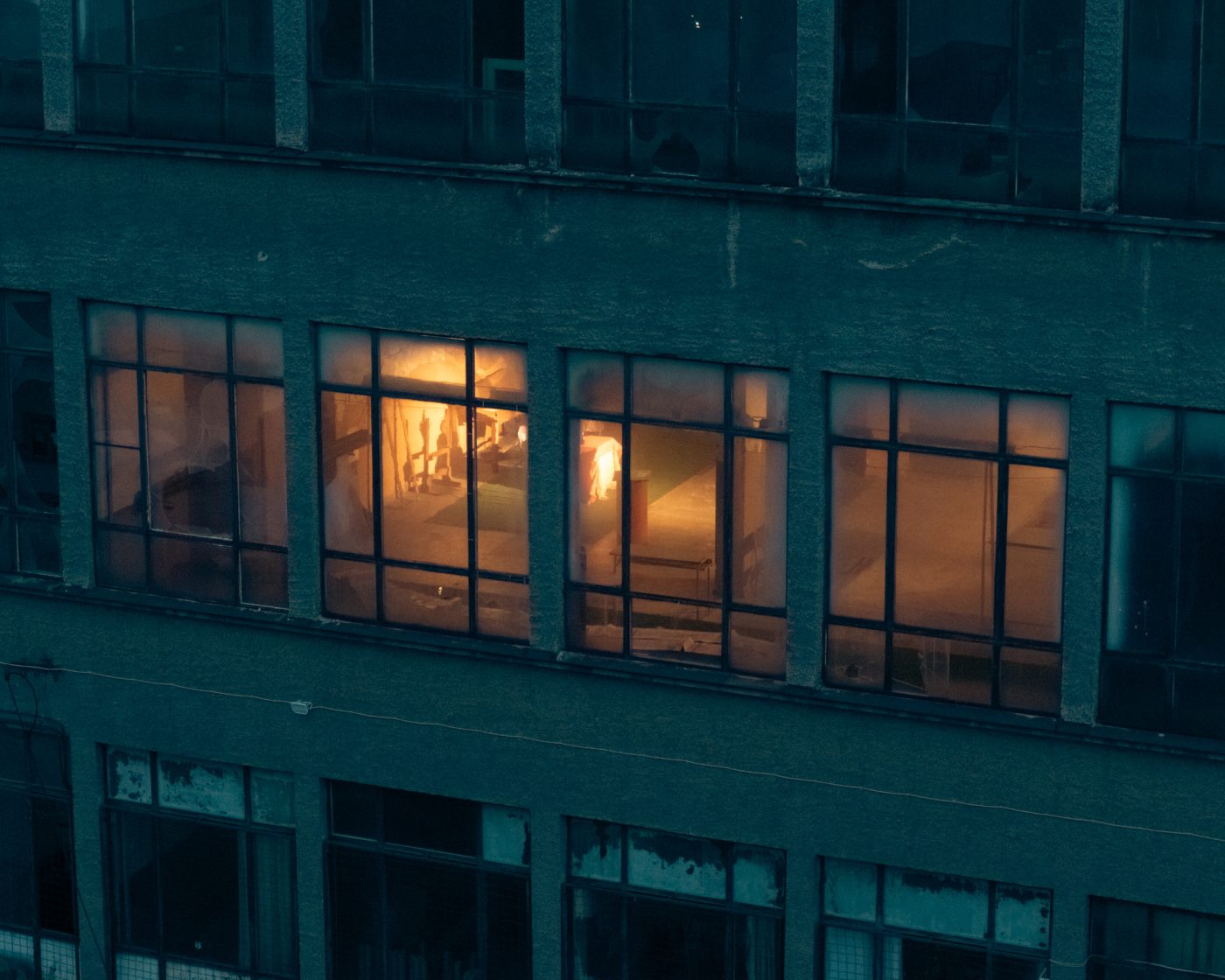
Center Christo and Jeanne-Claude at the HEAT Fest Sofia!
From June 4 to 6, the iconic Banski Square in front of the Regional History Museum of Sofia became a stage for ideas, art, urban solutions, and community energy. The first edition of HEAT FEST 2026 – Sofia Climate Festival, organized by the Sofia Development Association and the Sofia Municipality, with the support of Oborishte District, brought together citizens, scientists, artists, and international experts through a rich three-day program dedicated to the future of the capital.
The inaugural edition of the festival focused on one of the most important topics in adapting cities to climate change: the waters of Sofia. The area surrounding the Central Mineral Baths was chosen symbolically as a place where the city’s history, collective memory, and thermal heritage converge. At a time of increasingly frequent heat waves, water and green infrastructure are key to creating a cooler and healthier urban environment.
A special guest of the festival was Jessika Roswall, European Commissioner for Environment, Water Resilience and a Competitive Circular Economy, who toured the festival grounds and explored the green solutions presented throughout the event.
The activities, sustainable strategies, and the architectural competition for the complete transformation of the former Gabrovo Textile Technical School into the Christo and Jeanne-Claude Center were presented in a dedicated thematic area of the festival. The New European Bauhaus Zone provided a platform for discussions on sustainable design, architecture, and innovative urban solutions developed through active public participation.
It was emphasized that the Center exists not only as a future capital investment project. The building is already hosting artist residencies, workshops, exhibitions, and temporary events. Through these activities, the site is gradually opening itself to artists, local organizations, students, citizens, and partners from Bulgaria and abroad. This approach allows the future identity of the Center to be shaped long before the completion of the renovation works. The content, encounters, and participation of people are considered just as important as the physical transformation of the building itself. In this way, the Center is already establishing itself as a space for culture, education, contemporary ideas, and dialogue between industrial heritage and new creative practices.
Gabrovo’s presentation also highlighted two complementary European projects connected to the building and the future function of the Center. The Workwear Metamorphoses project, funded through the Creative Europe Programme, focuses on Gabrovo’s industrial history, textile heritage, contemporary design, and artistic exchange between European cities. Within the framework of the project, artists explore workwear as an element of industrial culture. Through creative residencies, meetings with experts, interviews with people connected to the textile industry, and a future traveling exhibition, the project links local memory to a broader European narrative about labor, production, and contemporary art.
The second project, AccesS, funded through the Horizon Europe Programme, focuses on accessibility, sustainability, and smart solutions for buildings and urban environments. The Christo and Jeanne-Claude Center is one of the pilot sites where new approaches to universal accessibility, energy efficiency, digital tools, and more inclusive environments will be developed and tested. Together, these projects build upon the core investment and demonstrate how a building can evolve not only as infrastructure, but also as a place for knowledge, cultural memory, innovation, and participation. This was the central message presented by Gabrovo within the New European Bauhaus Zone: that sustainable urban development is not only a matter of construction, but also of content, people, accessibility, and long-term public value.
Carnival weekend at the Christo and Jeanne-Claude Center!
During the carnival weekend (May 15–16), alongside tailless cats and satirical costumes, the Christo and Jeanne-Claude Center will present a multilayered program featuring two exhibitions, a performance, and a party with optimistic electronic music inspired by chess.
The program brings together artists and designers from six European cities—Chemnitz, Mulhouse, Manchester, Tampere, Łódź, and Gabrovo—as part of the project Metamorphoses of Workwear, realized with the support of the Creative Europe programme. Over the course of two years, through residencies in these cities, meetings with local communities, and research into both active and abandoned factories, artists created 18 contemporary workwear designs inspired by local industrial histories. The culmination—and grand finale—of the project will take place in the building of the former Textile Technical School in Gabrovo, now home to the Christo and Jeanne-Claude Center.
On May 15 at 18:00, the performance Metamorphoses of Workwearwill take place, in which participants without professional performance experience will wear the created designs and recount, from their own perspectives, the stories behind them. The “actor-models” will welcome visitors into classrooms frozen in 2009, production spaces, and dyeing and mechanical engineering studios, while audiences will be invited to discover the narratives scattered across the building’s different floors.
On May 16 at 15:00, before the carnival parade, the exhibition Metamorphoses of Workwearwill open. The installation brings together all 18 designs, interweaving Gabrovo’s textile industry with Chemnitz’s industrial innovation, Manchester’s labor resistance, Łódź’s fashion history, Mulhouse’s ornamental craftsmanship, and Tampere’s ritual practices.
Later that evening, from 23:00, the gymnasium of the former Textile Technical School will transform into a stage for the Romanian electronic duo K not K, whose music is inspired by the game of chess and defined by an optimistic sound. Following performances at festivals and venues across nearly all of Europe, the duo arrives in Gabrovo with an energy that naturally extends the carnival night. Carnival costumes are highly encouraged.
Running in parallel, on May 15 at 15:00, the exhibition Childhood Years will also open, presented in Gabrovo for the first time following its showing at the Bulgarian Cultural Institute in Paris. The exhibition explores childhood as the first stage of imagination, combining rare photographs from Christo’s early years in Bulgaria with works by contemporary artists connected to the Center. It was created to mark the 90th anniversary of Christo’s birth and the 30th anniversary of The Pont Neuf Wrapped.
Christo as a trapper with Anani, 1945 (photo from the Yavashev family archive)
Metamorphoses of Workwear is realised in collaboration with the Municipality of Gabrovo and in partnership with the Interactive Museum of Industry, with financial support from the Creative Europe programme. International partners in the project include the Museum of Industry in Chemnitz and the Central Museum of Textiles in Łódź. Childhood Years is organized by the Christo and Jeanne-Claude Center – Gabrovo and the Bulgarian Cultural Institute in Paris, with the support of the Museum of Humor and Satire, the Municipality of Gabrovo, and the America for Bulgaria Foundation.
Stories from the Textile Technical School in Gabrovo: Metamorphosis of Workwear
The Textile Technical School, the building that now houses the Christo and Jeanne-Claude Center, is an integral part of the history of the city’s textile industry, having long served as a generator of skilled professionals who supplied Gabrovo’s enterprises with a workforce. Within the framework of the project “Metamorphoses of Workwear,” we trace the school’s history through interviews with individuals connected to its activities – former students, teachers, neighbours, and enthusiasts – and transform these stories into a work of art that preserves their memories and serves as a foundation for future projects related to the city’s industrial past.
In partnership with playwright and director Martina Novakova, the collected stories were transformed into a script for a verbatim performance of the “travelling theatre” type, which took place on May 2 and 3 at the Center. We entered the building guided by the authentic voices of former students of the technical school, teachers, members of the Gabrovo municipal administration, neighbors, and tour guides, embodied by the actresses of the Gabrovo Drama Theatre “Racho Stoyanov” – Nadezhda Petkova, Magdalena Slavcheva, and Radostina Angelova.
“Metamorphosis of Workwear” aims to rethink the design of workwear in contemporary and future professions, inspired by the industrial heritage of six European cities – Chemnitz, Lodz, Manchester, Mulhouse, Tampere, and Gabrovo. In collaboration with the Interactive Museum of Industry – Gabrovo, we will give well-deserved attention to the history, development, and sustainability of industrial processes in Gabrovo.
As a project partner, the Christo and Jeanne-Claude Center plays a key role in actively engaging the local community, collecting and preserving stories of the region’s industrial heritage, and inspiring new artistic interpretations. For this very reason, we openly share the collected materials, in the hope that they will spark further processes and inspiration that can grow beyond the project’s initial framework.
Mariana Ivanova, 37 years old, tour guide – animator at the Interactive Museum of Industry Gabrovo.
Plamen Krastev, 61 years old, former teacher of specialized subjects – spinning – at the Textile Technical School.
Velina Rakova, 79 years old, retired, former employee of the Gabrovo Municipality.
Alexander Lalev, 47 years old, expelled from the technical school due to an excessive number of absences.
Ivelina Ivanova, 37 years old, designer and embroiderer, former student of the technical school, with a studio at the Christo and Jeanne-Claude Center.
Galina Gancheva, 46 years old, fashion designer, former (not very serious) student of the technical school.
Krasnodar, 81 years old, neighbor, has lived next to the technical school his entire life.
We continue with a follow-up to the previously successful performance “A Frame from the Textile” at the Christo and Jeanne-Claude Center, directed by Martina Novakova, which was based on the interviews conducted last year. A series of theatrical workshops with a group of students from the National Aprilov High School will be held to create a second performance, based on the stories already collected from Gabrovo residents about the past, present, and future of the city’s textile industry. The performance will take place on March 19 and 21 at the Christo and Jeanne-Claude Center. Here are the additional interviews the students have conducted so far:
Cenka Petrova
Melipe Veleva
Radka Kosturska
A Frame from the Textile is part of the major European project “Metamorphoses of Workwear,” funded by the Creative Europe program. The project connects six cities with rich industrial histories – Chemnitz, Gabrovo, Lodz, Manchester, Mulhouse, and Tampere – around the idea of rethinking workwear through the lens of today’s labor, contemporary design, and local memory. The Municipality of Gabrovo is an official project partner, while the Center implements it at the local level.